In the 12th and 13th centuries, Lincoln was a city of 6,000 people. Not a small place when you consider that London itself only held 18,000 people. The county of Lincolnshire was the largest diocese in England and stretched from the River Thames to the Humber Estuary, and as such was an important administrative area. Its wealthy status was due to wool, the key reason, between 1250 and 1350, for the successful economy. But of course, as in other medieval cities, there were many other trades in the city, butchers, bakers, brewers, blacksmiths, carpenters, shoemakers, and potters.
To organise these trades, guild organisations were formed in England early in the medieval period, with each trade having its own guild. The guilds fixed prices to keep things fair, they ensured work was of a high standard, and they looked after their members when they were ill or too old to work. Lincoln had its fair share of guilds, and alongside the trade guilds it also had religious guilds. These guilds could help with funeral expenses if needed, and employ priests to pray for the souls of the dead, and the largest of these in Lincoln was St Mary’s guild.
The building dates back to 1157, and was built as a townhouse for King Henry II. When built, the house would have sat in the suburb of Wikeford, now the modern-day High Street. Wikeford or Wigford as it is now, is still an area of Lincoln but it now sits further west of the city. It was a major domestic building of high status, and would have been used for the crown-wearing ceremonies at Christmas. These ceremonies were re-enactments of the monarch’s crowning ceremony. The ritual was replayed on special religious days, or as in the case of Henry on Christmas day 1157. The house had various uses after this, storage of wine for the king being one, but in 1251 the building was sold by the butler of Henry III; Michael de la Burne. It then became the headquarters of the Great Guild of St Mary, housing a society of businesspeople and tax collectors.
The building has also been known as John O’Gaunt’s Stables. It was thought that this powerful man had buildings opposite the guildhall and he may have rented stables from it, giving it its name. John O’Gaunt was one of the sons of Edward III, and he married his long-term mistress, Katherine Swynford, in Lincoln cathedral in 1369.
St Mary’s Guild used the property as its Guildhall until 1547 and it then passed into the ownership of the Lincoln City Council. The Bluecoat School took over the lease in 1614 until 1623 and major alterations were completed. The Norman House at the rear was built around 1618 and in the 18th century, the present north range was rebuilt. This was in commercial use as a maltings along with the Norman House. The south range was built in 1896 for C C Sibthorpe, and was a joiners and undertakers store, and of course gave the name to the current Sibthorpe Street. The building was purchased by City of Lincoln Council in 1938, but continued in commercial use as Lucas’s builders’ depot until 1981, when it was leased by the Lincoln Civic Trust. A restoration of the Guildhall was undertaken by the Trust in 1984, when the south range became St Peter at Gowt’s Parish Hall, and it was during these renovations that a section of the Roman Fosse Way complete with wheel ruts was discovered beneath the floor. This has been preserved and can be seen in the building today.
The building faces onto the modern High Street, the limestone frontage has a moulded carriageway arch with a segmental inner arch. This entryway is flanked by a single buttress that projects from the wall and lends support. It displays both Romanesque (semi-circular arches) and Gothic architectural features (pointed arches). It is a palatial example of these kinds of townhouses.
This fantastic, atmospheric guildhall is the only survivor from the small group of the king’s town houses which existed in several major towns across England, and today St Mary’s Guildhall is a grade I listed building and a Scheduled Monument.
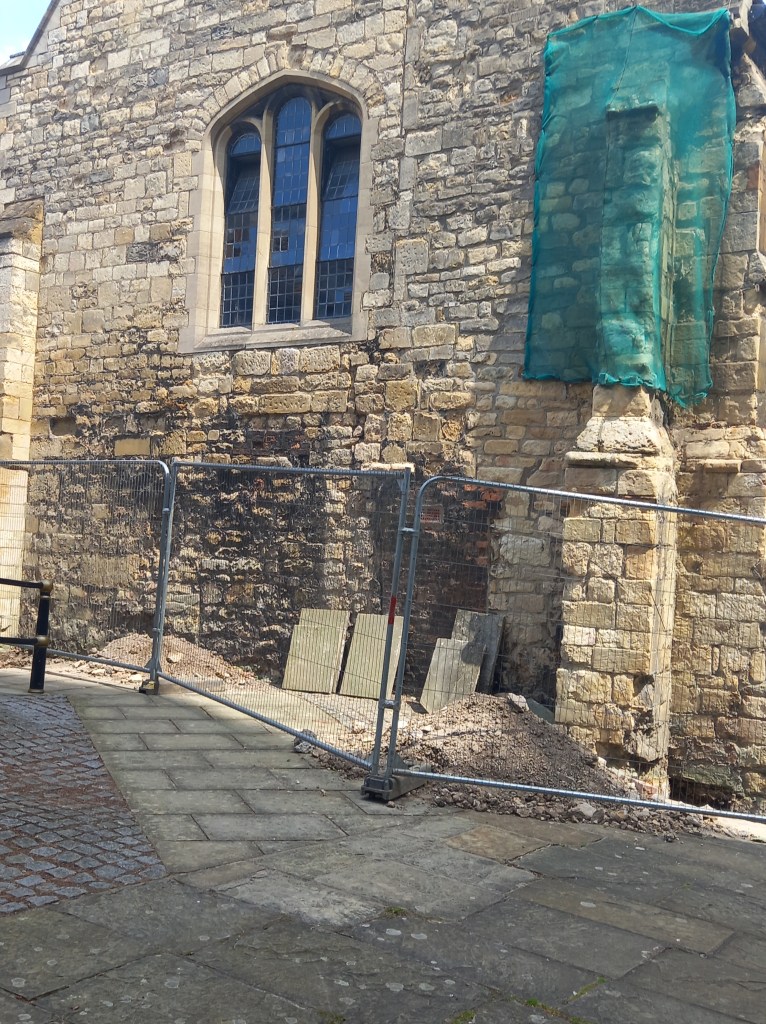
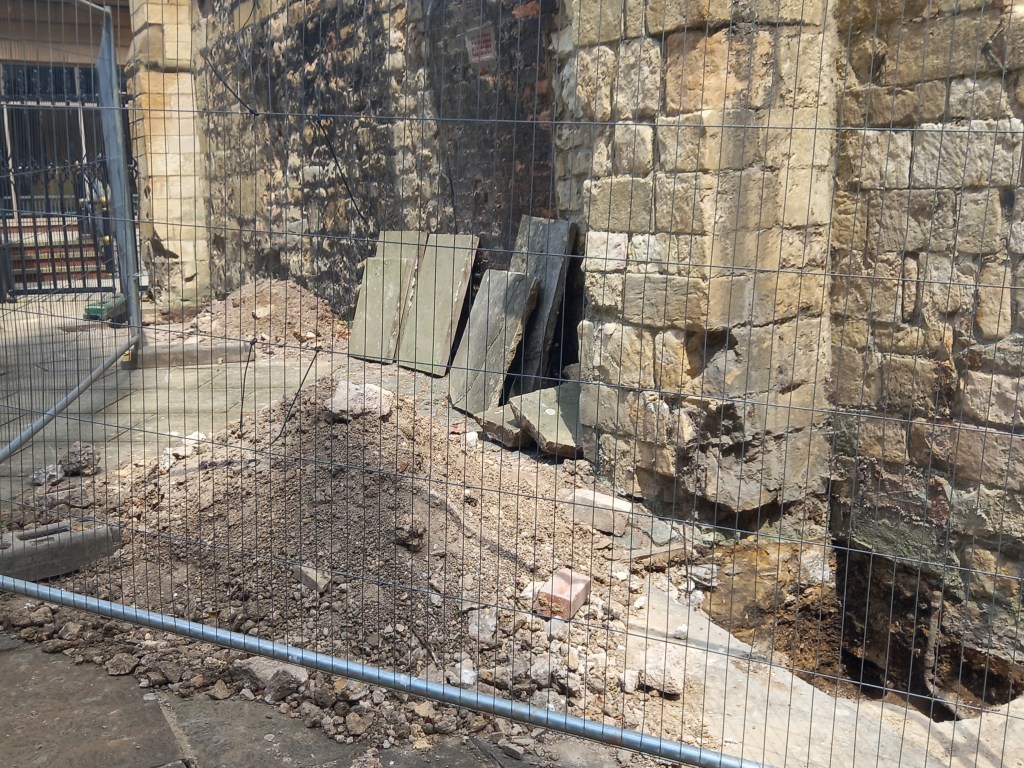
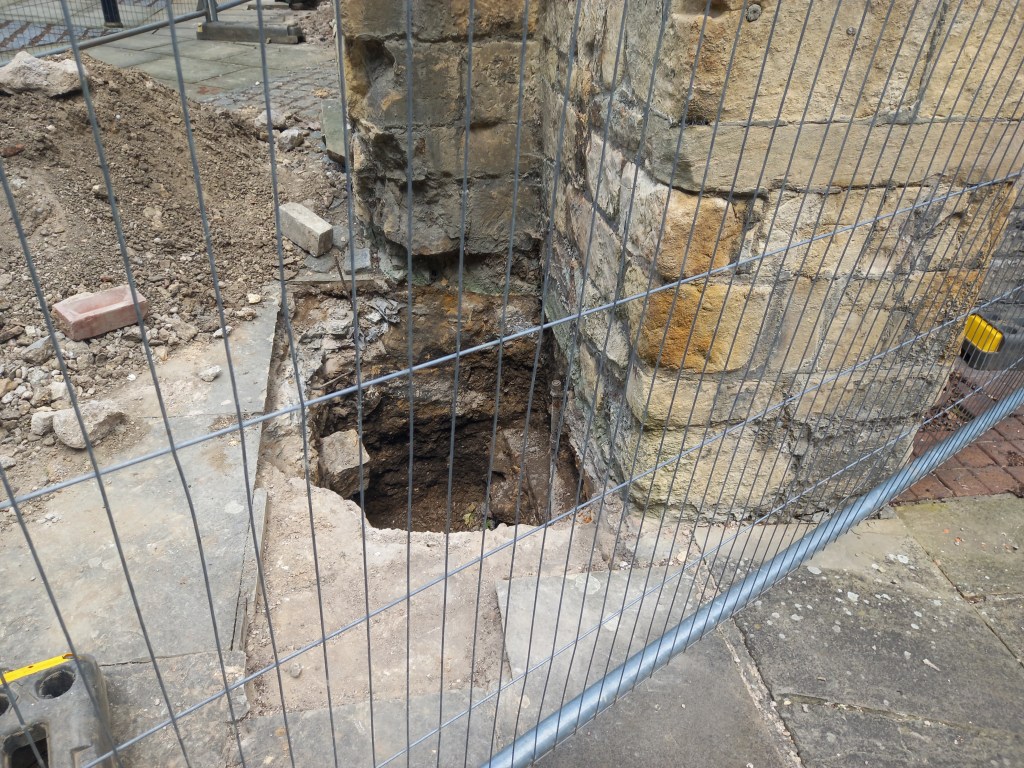
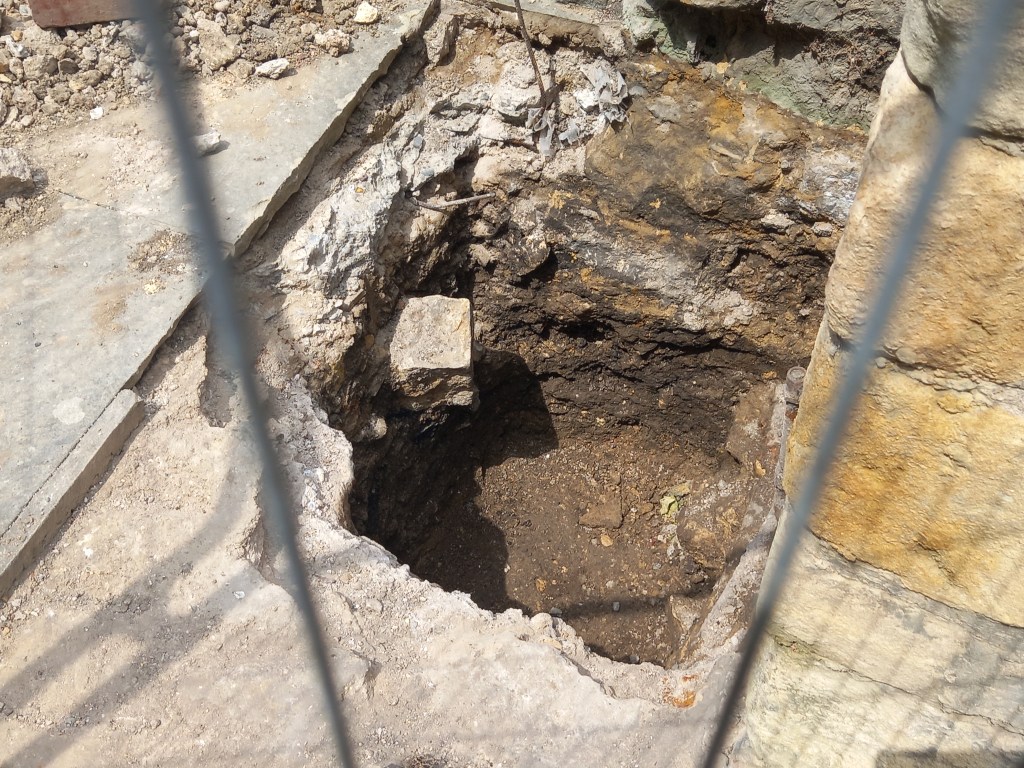
And now the City of Lincoln Council has secured funding through The High Streets Heritage Action Zones (HSHAZ) programme and Historic England, which will allow this fantastic and hugely important building to be restored. The historic buildings have been in a poor condition for much of the latter 20th Century, and initial structural surveys in 2021 confirmed that there were substantial structural works needed as a matter of urgency. So, it really is vital that the renovations are completed now before this treasure is lost to us completely. The funding will allow the building to be brought back into structurally sound condition, and the restorations will ensure that this building, key in the history of Lincoln, and Britain as a whole, survives well into the future.
 Janet Stock