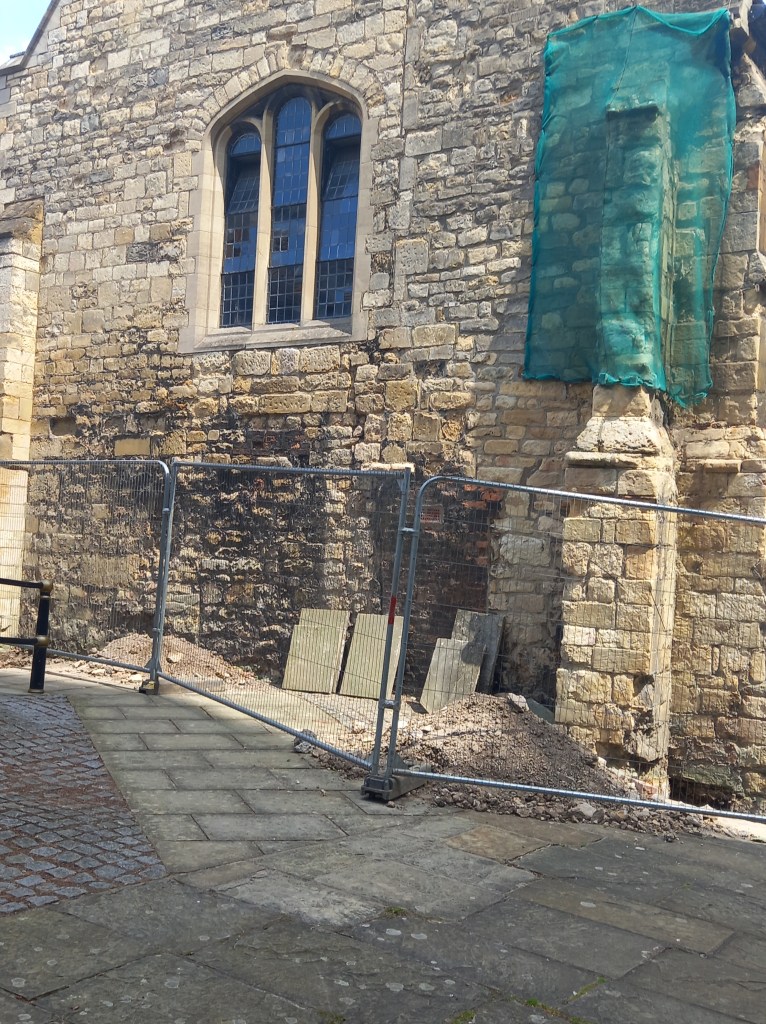
In a space vacated by a spinning school in 1831, and tucked into the undercroft of Greyfriars, once ran an institution built on a genuinely radical idea for its time: that working men deserved access to education, science, and books. A school not just for the wealthy.
The Lincoln Mechanics’ Institute was founded in 1833, at a meeting called by the Mayor after a petition from eight aldermen and 176 residents. The Earl of Yarborough chaired the first gathering and became its first major backer, pledging £50 toward getting it off the ground. He promised a further £100 if a merger with the Lincoln Literary Society succeeded. It did, and within a year the Institute had fitted out three teaching rooms, a library, and a small museum, with John Boole, father of mathematician George Boole as curator.
Its opening lecture, in April 1834, couldn’t have gone better. Dr Dionysius Lardner demonstrated working steam engine models, just years before Lincoln became one of the country’s leading centres for steam engine manufacture. The following night, a Grand Ball was held at the City Assembly Rooms to raise funds and this would become an annual tradition. Reporters described Yarborough, local MPs, and Lincoln’s leading citizens dancing “with great spirit until a late hour.”
The Institute’s list of supporters reads like a who’s who of the period. With George Boole, Charles Seely, psychiatric reformer Edward Parker Charlesworth, and Chartist leader Thomas Cooper among them. But in 1845, the Rector of South Hykeham accused it in the local press of “degenerating into a Radical club-house,” largely because it had dared to stock a book written by Cooper. He was a former committee member turned political agitator, and wrote the book whilst in prison. Reading the Rector’s complaint now, what stands out isn’t the book (a fairly gentle account of Lincolnshire life) but who he was really objecting to, principally a Whig earl, and a mathematician who was “not Conservative.”
By the 1840s, the Institute had embraced its era fully, organising cut-price railway excursions to Nottingham and Derby on the newly opened line, and appointing a teacher of mechanical drawing for local apprentices. This tied education directly to trades, reshaping the city.
But it didn’t last. A move to larger premises above the Buttermarket in 1863 gave it more room, but by 1892 the City Council wanted the space for a public library, and the Institute was dissolved in 1896 with 600 members still on its books. Its desks went to Lincoln Grammar School; its library was sold. Only its small museum collection eventually found its way home. It merged into what became the City and County Museum, returning, in a quiet way, to somewhere near where it began.
This piece draws on research gathered as part of my volunteering with Re-Imagining Greyfriars. You can find out more about the project here
Greyfriars | Lincoln’s Historic Friary from Heritage Lincolnshire
 Janet Stock